Journal
From Decommissioned to Indistinguishable from New: Inside the Remanufacturing Process
A remanufactured Steelcase workstation that reads as new on the floor started as someone else's decommission. Here are the five stages it passes through in between — and why each one is done under one roof.
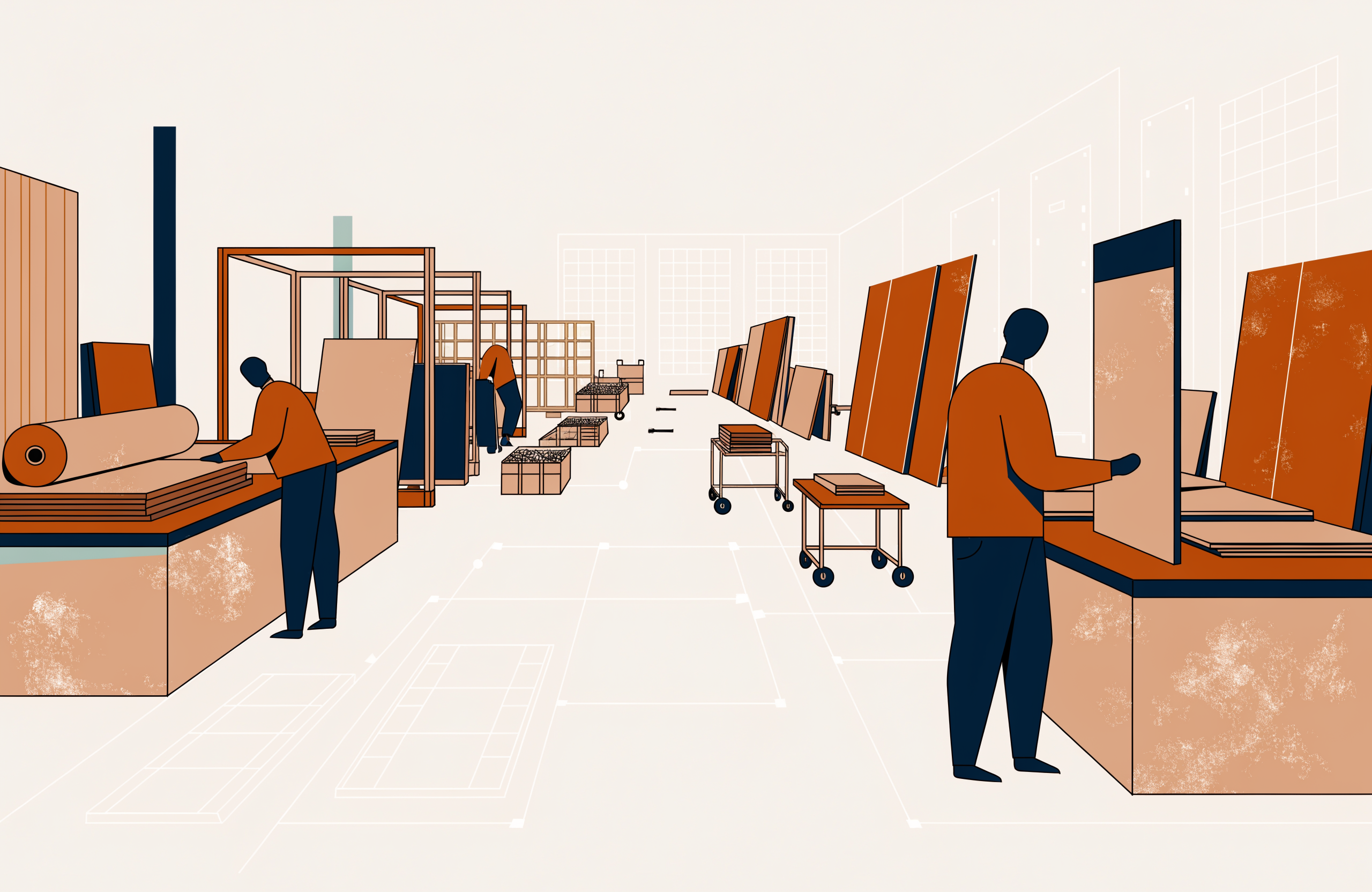
A remanufactured workstation that looks new on your floor began its second life as a decommission somewhere else — a building being cleared, a system pulled off a floor that was being reconfigured. What happens between those two points is the difference between “used furniture that was cleaned up” and a product Roberts can warranty like new. It's a five-stage process, and the reason it holds to a consistent standard is that every stage happens in Roberts' own shops rather than being handed between vendors.
1. Source and select
Not every system is worth remanufacturing, so the process starts with selection. Roberts replenishes a large standing inventory by acquiring whole buildings of furniture, then keeps only the best steel-framed systems — the Steelcase, Herman Miller, and Haworth frames engineered to outlast the components attached to them. What isn't a strong candidate for remanufacture never enters the line.
2. Dismantle and inspect
Selected systems are fully dismantled — not partially disassembled for a surface clean, but taken down to the frame. Every part is inspected on its own terms. This is the step that separates remanufacturing from refurbishing: nothing is judged by how it looks assembled, because problems hide beneath finishes and inside mechanisms.
3. Repair or replace
With every part inspected, each one is either repaired or replaced. Repairable components are restored; anything past repair is swapped for a component equal to or better than the original. The standard here is functional, not cosmetic — the goal is a product that performs like new, not one that merely presents like new.
4. Refinish
This is where Roberts' in-house disciplines do the visible work, and where owning the shops pays off. Frames and metal components are refinished on Roberts' own advanced baked-on powder-coating line for a durable, long-lasting finish; surfaces are painted or stained; seating and panels are recovered in the upholstery department; and the millwork and metal-fabrication shops produce custom or replacement parts to match. Finishing uses LEED-compliant, low-emitting paints, sprays, solvents, and glues — the same materials that let remanufactured products contribute to a project's LEED goals. Because all of this happens under one roof, there's no middle-man handoff where quality and schedule tend to slip.
5. Deliver and install
The finished system is delivered and installed through Roberts' Move Management and Installation service, coordinated on the client's schedule — and the same crews can reconfigure furniture you already own alongside it. Roberts' own remanufactured furniture generally ships on about a four-week lead time.
The result
What comes off that line is a system that meets the original specification, carries a full warranty, and reads as new on the floor — while keeping the highest-value part of the original, its steel frame, in service instead of in a landfill. It's the same reason the process is worth doing at all: done to standard, remanufactured furniture isn't a compromise against new. It's the same specification, arrived at a better way.
See the full process in more depth, or request a quote to put it to work on your floor — (315) 451-9185.