Journal
How to Reconfigure the Office Cubicles You Already Own
Teams grow and floors change. How to rework the cubicles you already own, step by step, and what we can do with Avenir that the original panel never could.
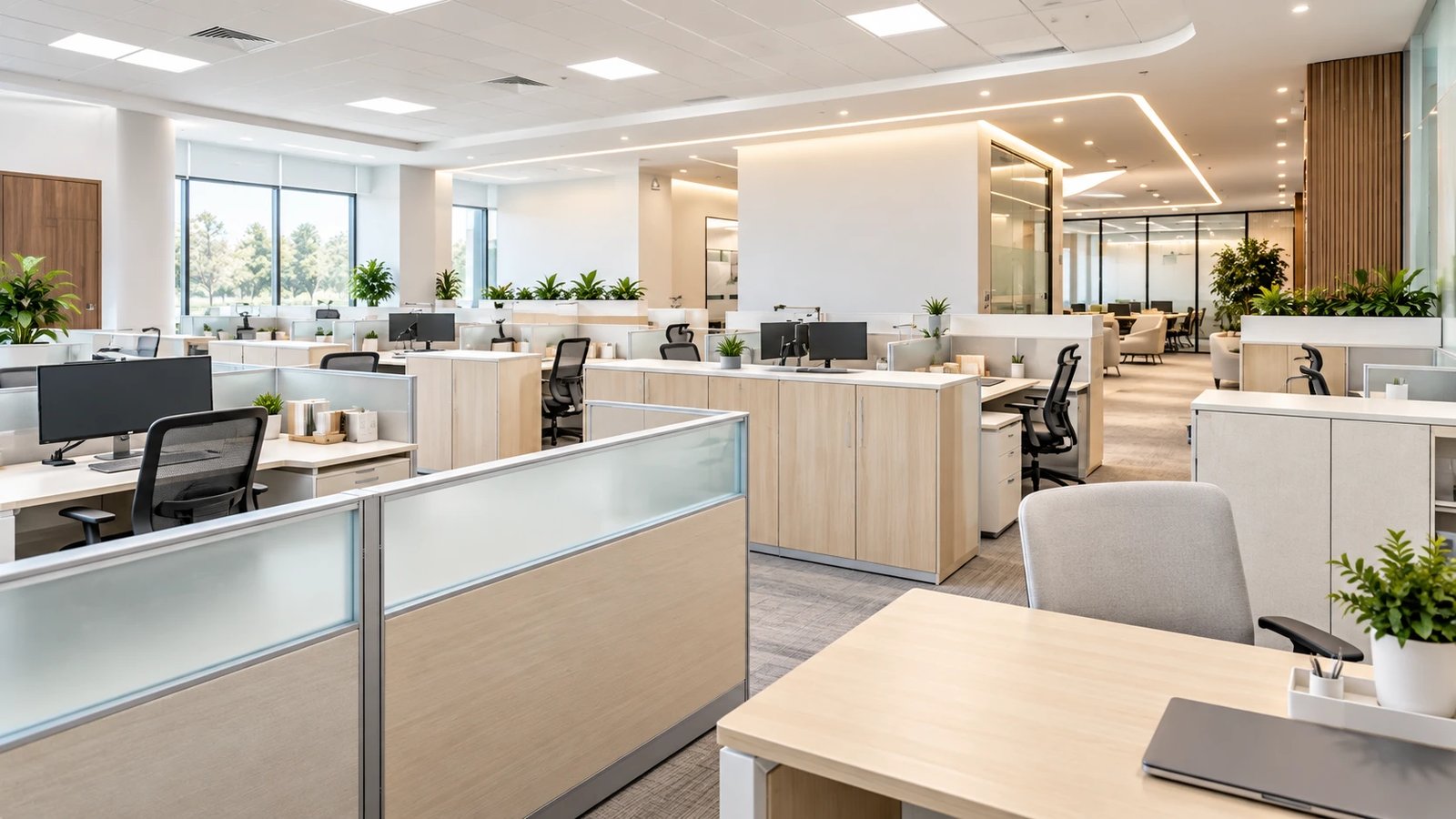
If your floor runs on a commercial panel system and the frames are in good shape, you probably don't need new cubicles. You need the ones you have rebuilt into a layout that fits how you work now. Most commercial systems were made to come apart and go back together, and Steelcase Avenir, the system we know best, goes further than most. We keep the frames, panels and work surfaces you already own, add what you're short on, and refinish it all so the old and the new read as one floor. When the frames are sound, that usually costs less than starting over.
A workplace is never finished. Teams grow, departments move, and the layout that worked three years ago stops working.
We build for the second move and the tenth, not just the first delivery. Here's how a reconfiguration goes, and how to tell if it's the right move for your floor.
What we can do with Avenir that the original panel never could
When Avenir first came out, it was a monolithic panel: a metal frame covered in tackable, acoustical fabric, in the sizes the catalog offered. Avenir is our bread and butter. Over the years we've learned it inside and out, and we've taken it a lot further than the original ever went.
- We cut panels to size. Our shop cuts Avenir panels to size at an OEM standard, so a run of stations fits your room instead of the catalog. If your plan calls for a size the original line never made, our panel shop makes it.
- We stamp our own metal. The metal for these panels is stamped right here in our Liverpool plant.
- We bring in glass and acrylic. We cut quarter glass tiles and make acrylic and glass stanchions, so you can let light into a row of stations without losing the panel.
- We laminate panel skins. Where fabric isn't the right fit, a laminated skin gives you a hard surface in its place.
- We match old and new. Frames and trim go through our own powder coating line and fabric is recovered in our own upholstery department, so the stations we add look like the ones you already have.
That's only part of the list. It's why an Avenir floor can be reworked again and again: more stations, lower or taller panels, glass where you want light, laminate where you want a hard surface. It's also a sharp-looking panel. Herman Miller Ethospace reconfigures well too, and we rework it and the other systems listed below, but Avenir is the system we know best.
What we can change
- Panel heights. Lower to open a floor up, taller for privacy.
- Panel sizes. Cut to fit your room, not the catalog.
- Glass and acrylic. Quarter glass tiles and stanchions for light.
- Laminate skins. A hard surface in place of fabric.
- Fabric. Recovered in our own upholstery department.
- Frames and trim. Powder coated to one color.
- Station count. Smaller stations to fit more people.
- Storage. Moved off the work surface, or resized: a three-drawer lateral file can become a two-drawer.
- Rooms. Private offices or meeting rooms carved out of open space.
- Power and data. A new power plan, lined up with your electrician.
- How your people work
- Take stock
- Measure
- Reuse or replace
- See the plan
- Power and data
- Schedule the work
Step 1: Start with how your people work
Before anyone moves a panel, write down what the new floor has to do. How many people sit here now, and how many will in a few years? Which teams need to be near each other? Who needs privacy, and who needs to talk across the aisle? Where do people meet? A layout planned around headcount alone tends to get redone sooner than anyone planned.
Step 2: Take stock of what you have
Walk the floor and note:
- The system. The manufacturer and product line. Not sure what you have? Send us a few photos (a full station, a panel edge, and a spot where two panels meet) and we'll tell you.
- Panels. How many, and their heights and widths. Lower panels open a floor up. Taller ones add privacy.
- Work surfaces and storage. Surfaces, pedestals, overhead bins and files.
- Power and data. Whether the panels carry power, and where the floor connects to the building.
- Condition. Worn or dated fabric, finishes that don't match, and anything bent or broken.
Step 3: Measure the space
You'll want the room's dimensions, plus the columns, windows and doors, and where power and data come in (walls, floor cores or ceiling). Leave room for aisles, since every plan has to meet accessibility, building and fire codes. If you have a CAD file or a building floor plan, send it along. It can save a site visit.
Step 4: Decide what to reuse, rework or replace
| What you find | What usually happens |
|---|---|
| Sound frames, one system across the floor | Reuse them in the new layout. |
| Worn or dated panel fabric | We recover it in our upholstery department. |
| Scratched or mismatched metal | We powder coat it all to one color. |
| Not enough panels, surfaces or storage | We add remanufactured parts from the same system, finished to match. |
| A mix of systems from different manufacturers | Standardize on one, because parts from different makers generally don't connect. |
| Damaged parts | We repair them, or replace them with a part equal to or better than the original. |
Anything you don't need anymore can come back to you as trade-in credit or a buy-back, or we can take it out and recycle it. See Banking & Buy Backs.
Step 5: See the new floor before anything moves
Our in-house design team draws the new layout in 2D and 3D with the finishes you choose, so you see the floor before a single panel comes down. We start from an inventory of what you own, so the plan uses as much of it as possible. Typical changes include smaller stations to fit more people, lower panels for teams that work together, private offices or meeting rooms carved out of open space, and storage moved off the work surface.
Step 6: Plan power and data early
Powered panels carry their wiring through the base, so a new layout usually means a new power plan. The tie-in to the building's power is typically done by a licensed electrician. Tell us early, and we'll line up the panel power with the electrician's work.
Step 7: Schedule the work around your business
We plan the schedule around your operations. Our crews take the stations down, we refinish what needs it, and we rebuild the floor to the plan you approved, on our own trucks and with our own people. Any remanufactured parts we add generally ship in about four weeks.
Reconfigure, buy remanufactured, or buy new?
| Reconfigure what you own | Buy remanufactured | Buy new | |
|---|---|---|---|
| Best when | The frames are sound, the floor runs on one system, and you need a new layout, more stations or lower panels | The system is damaged or mixed across manufacturers, or you're changing how people work, say from panels to open benching | You need a product line we don't remanufacture, or a look only a current catalog has |
| Cost | Quote-based, and usually less than starting over | Typically 30% or more below new | Full price |
| Lead time | Added parts generally ship in about four weeks | Generally about four weeks | The manufacturer's lead time |
| Waste | What you already own stays in service | Keeps a steel frame in service instead of making a new one | All-new materials and manufacturing |
| Warranty | Parts we add carry our Lifetime Limited Warranty | Our Lifetime Limited Warranty | The manufacturer's warranty |
For cost, quality and warranty side by side, see Remanufactured vs. New Office Furniture.
Send us photos of your current stations and a floor plan. Our designers will show you what the space can become with what you already own.
Systems we reconfigure and remanufacture
- Steelcase Avenir
- Steelcase Answer
- Steelcase Series 9000
- Herman Miller Action Office 2
- Herman Miller Ethospace
Can you do it yourself?
Moving a pedestal or swapping a work surface within the same system is something plenty of facilities teams handle on their own. Moving panels, anything powered, or anything that changes the layout is a job for an installer who knows the system, so the connections are tight, the panels are stable and the result meets code. Our warranty doesn't cover changes to the product we haven't approved, so give us a call before you start moving panels yourself.
Questions buyers ask
Can you reconfigure cubicles we already own?
Yes. We can reconfigure just about any furniture you already own and fold it into the new layout, so nothing usable goes to waste. Avenir is the system we know best, and we also work with Steelcase Answer and Series 9000 and Herman Miller Action Office 2 and Ethospace.
How much does it cost to reconfigure office cubicles?
It's quote-based. The price depends on the number of stations, how many parts need adding, how much refinishing and recovering is needed, any power changes, and the schedule. Send us photos and a floor plan, and we'll come back with an itemized quote.
How long does a cubicle reconfiguration take?
It depends on the size of the floor and what needs adding or refinishing. We give you a realistic date with the quote. Remanufactured parts we add generally ship in about four weeks.
Can we add workstations to the system we already have?
Yes. We add remanufactured parts from the same system and finish them to match, so the new stations and the ones you already have read as one floor.
Do you reconfigure cubicles in Syracuse and Central New York?
Yes. We're based in Liverpool, NY, just outside Syracuse, and we install across Central New York and nationwide. Call (315) 451-9185 or email info@robertsofc.com.
Steelcase, Herman Miller, Avenir, Answer, Kick, Ethospace, and Action Office are trademarks of their respective owners. Roberts Office Furniture Concepts is an independent remanufacturer and is not affiliated with, authorized by, or endorsed by those manufacturers.